Immediate Risk Mitigation
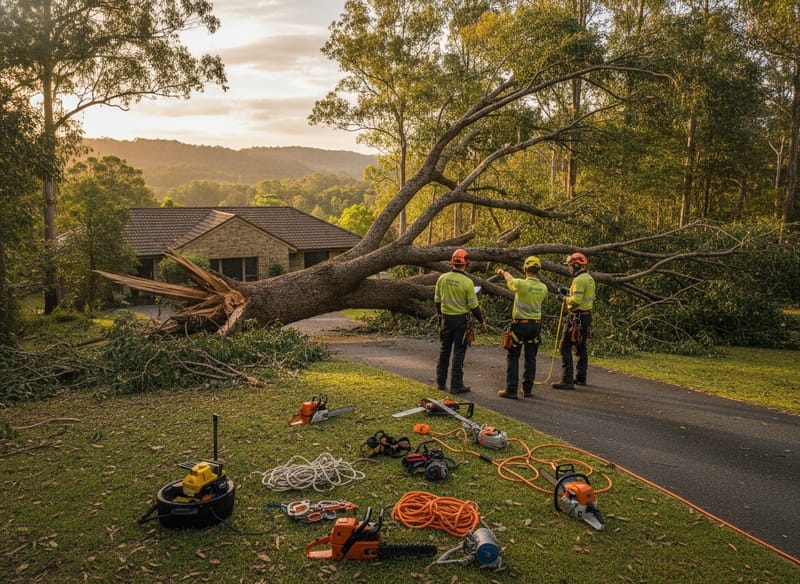
Stop dangerous trees from collapsing further or causing structural building damage.
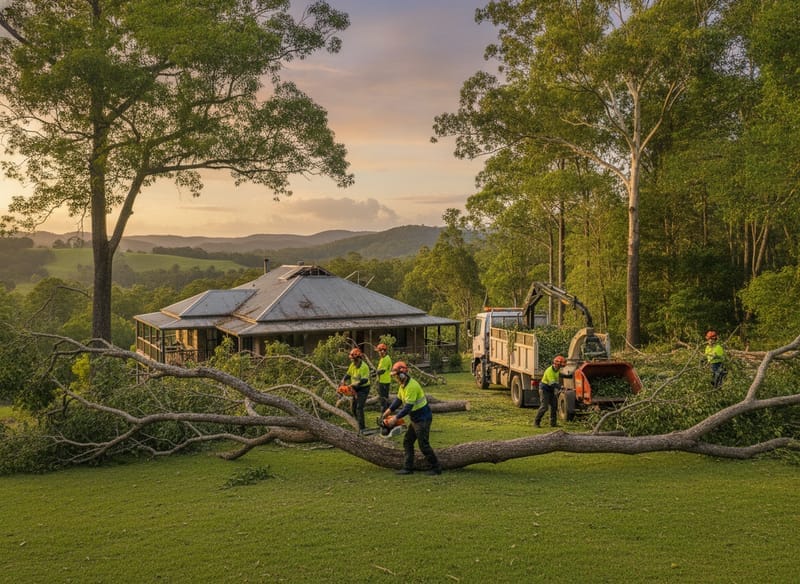
Rapid stabilization and removal of dangerous, fallen, or storm-damaged trees threatening homes and driveways.
Servicing Glenella and all Mackay Regional Council localities.
When unexpected storms or sudden root failure put your property in danger, our emergency tree removal Glenella team responds to secure the site and clear hazards.
Severe tropical weather and cyclonic systems bring intense rainfall to the Pioneer River catchment. Glenella's soft, saturated soil leads to root plate failure in large canopy trees, causing entire trees to collapse across fences and structures.
Stop dangerous trees from collapsing further or causing structural building damage.
Clear blocked driveways and entryways so emergency vehicles and residents can move freely.
Detailed photographic proof and arborist invoices simplify home insurance claims.
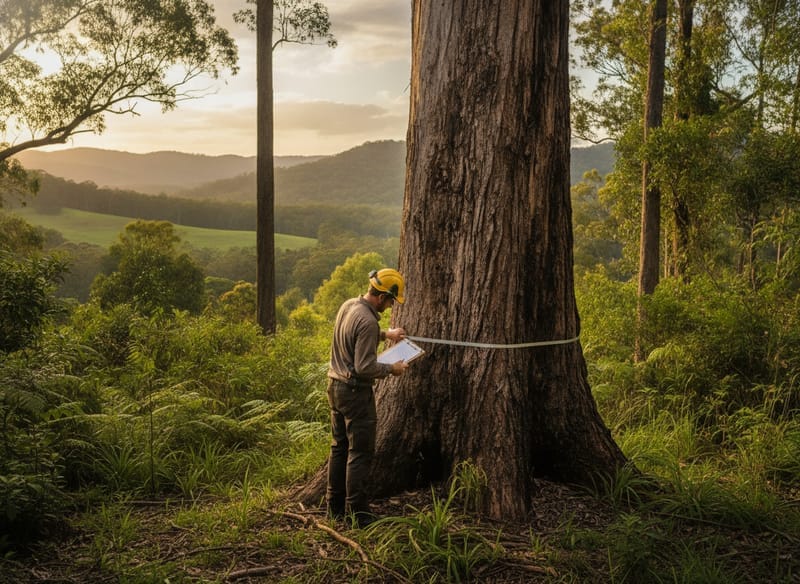
We evaluate structural hazards, electrical risks, and dynamic loads on site.
Propping, winching, or tying off compromised branches prevents further movement.
The tree is systematically dismantled and lifted clear of structures.
Branches are mulched, timber is removed, and the area is left secure.
When severe tropical storms tear across the Pioneer Valley or monsoonal rain saturates the coastal soil, weakened trees fail without warning. For homeowners, commercial sites, and acreage properties across the district, our team delivers the rapid, professional Emergency Tree Removal Glenella residents rely on during critical situations. Whether a wind-snapped poinciana is resting on your roof or a towering forest red gum is uprooting over your driveway, our arborists deploy with heavy-duty rigging and winches to stabilise your site. Glenella combines quiet residential cul-de-sacs with low-lying ground and expansive blocks bordering Richmond and Mount Pleasant. Under saturated storm conditions, heavy branches and unstable root plates present an immediate danger to life and structural assets. Our experienced climbing crews arrive prepared to secure your property perimeter, eliminate immediate hazards, and safely execute complex storm clearances under intense conditions.
Attempting to tackle storm-damaged timber with a standard chainsaw is exceptionally hazardous. Wind-loaded canopies, fractured limbs held under extreme tension, and compromised root systems behave unpredictably when cut, frequently kicking back, rolling without warning, or dropping crushing weight on operators. Inexperienced contractors or well-meaning neighbours lacking commercial rigging systems routinely cause severe secondary damage to rooflines, boundary fences, and underground services.
Uncontrolled cutting can also complicate your property insurance claims or breach local vegetation protections if hazardous conditions are not recorded correctly. When you call our certified team, we deploy qualified AQF Level 3 climbing arborists equipped with dynamic winch lines, rigging friction blocks, and specialised dismantling gear. We systematically eliminate stored kinetic energy within storm-tangled crowns, safely bringing down dangerous timber while establishing detailed photographic records to support your insurance claim.
Our emergency response protocols rely on specialised arboricultural rigging, mechanical advantage systems, and rapid site stabilisation techniques designed to safely dismantle storm-damaged trees under severe structural loads.
Deployed for massive trees that have fallen onto structures or are trapped over power lines. We rig and sling individual canopy segments, allowing a mobile crane to lift heavy wood vertically away from the building without exerting destructive loads on damaged roofs.
When a tree is partially uprooted and leaning toward buildings or neighbour boundaries, our climbers install heavy-duty bull ropes and mechanical 5-tonne winches to arrest movement and guide the trunk down safely into a controlled drop zone.
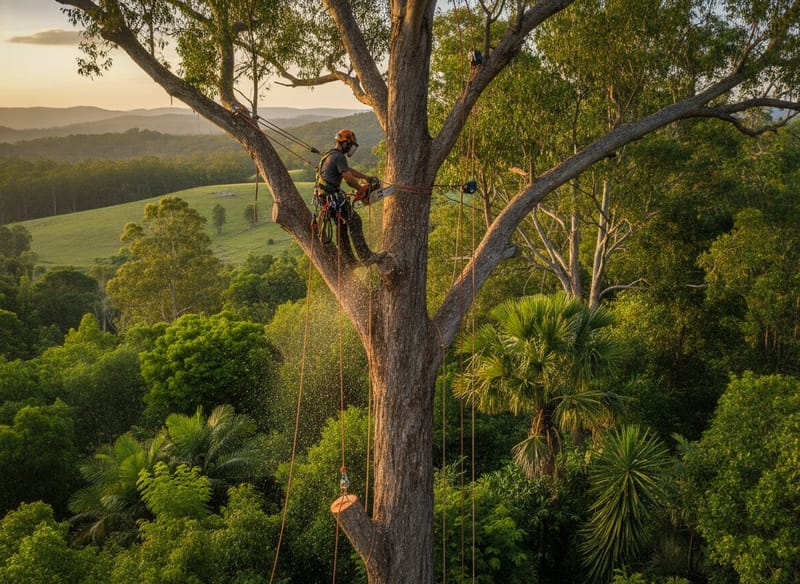
Storm squalls frequently shear heavy secondary leaders that remain lodged high in the canopy. We access the upper crown using single-rope techniques (SRT) to secure, tag, and lower dangerous hanging timber with controlled lowering lines.
Monsoonal downpours often liquefy ground support around mature root plates. We install temporary earth anchors and tension straps to prevent the root mass from shifting dynamically while our cutting crew systematically relieves crown weight.
Once structural risks are neutralised, our commercial 12-inch wood chippers and tipper trucks rapidly process sprawling green waste on-site, restoring immediate vehicle access to driveways, roadways, and emergency exit routes.
When disaster strikes your property, our rapid-response protocol moves swiftly to secure your surroundings and eliminate structural hazards: - Immediate Triage and Dispatch: We assess the urgency of your situation over the phone, verify structural and electrical risks, and mobilise our nearest Glenella crew with an expected arrival time quickly. - On-Site Hazard and Structural Assessment: Our lead arborist inspects trunk fractures, root-plate integrity, canopy tension points, and proximity to Ergon power lines before establishing a secured drop zone. - Comprehensive Pre-Work Documentation: We capture clear, timestamped photographs of the failure points, building impacts, and surrounding damage to satisfy Mackay Regional Council emergency provisions and insurance requirements. - Surgical Make-Safe Execution: Utilising tree-climbing systems, friction rigging, and high-capacity winches, our climbers relieve canopy weight and lower hazardous limbs section by section without causing additional property impact. - Thorough Site Clearance: We cross-cut heavy timber, run branch debris through our industrial wood chippers, and clear all access paths, gutters, and yards. - Post-Incident Reporting: We provide you with a comprehensive, itemised arborist invoice and photographic report tailored for insurance loss adjusters.
Emergency operations demand absolute adherence to rigorous safety standards. Our field crews are headed by qualified AQF Level 3 climbing arborists, supported by AQF Level 5 consulting arborists capable of delivering formal post-incident structural reports. Every removal follows strict Safe Work Australia codes of practice and the technical pruning parameters of AS4373 (Pruning of Amenity Trees). We operate with full public liability insurance and comprehensive WorkCover coverage. Under the Mackay Region Planning Scheme 2017 and current state disaster clearing exemptions active across the Mackay Disaster District following ex-Tropical Cyclone Koji, landholders can remove trees that present imminent threats to life or property. We document all hazards meticulously prior to cutting to ensure complete compliance with local council regulations.
Delivering reliable Emergency Tree Removal Glenella wide requires an in-depth understanding of local soil profiles and vegetation dynamics. Glenella features a blend of alluvial creek flats and gently sloping ground. During the wet season from November through April, heavy monsoonal rain quickly saturates these clay-rich soils, severely weakening root anchorage.
Signature local trees such as expansive poincianas (*Delonix regia*), dense backyard mangoes (*Mangifera indica*), and large raintree (*Samanea saman*) specimens develop massive lateral limb weight. When high wind gusts collide with waterlogged foliage, root-plate heave and main-stem fractures occur rapidly across Glenella, West Mackay, and Mount Pleasant. Whether addressing an emergency on a compact residential block or clearing access roads on semi-rural acreage, our fleet uses narrow-access spider lifts and heavy tipper trucks suited to Glenella's specific terrain.
Once emergency removals are complete, surviving trees on your property may still carry unseen structural trauma from high-velocity wind loads. Look for newly formed canopy splits, broken hanging branches, bark tears along trunk unions, or freshly mounded soil around the base. We recommend booking a post-storm health check with our AQF Level 5 arborists to evaluate the ongoing stability of remaining specimens. Regular preventative maintenance—including canopy thinning, weight reduction on overextended poinciana limbs, and formative deadwooding under AS4373 standards—greatly reduces the likelihood of catastrophic branch failure during future severe weather events. Contact our team if you observe new trunk leaning or fungal growth near the root collar.
Emergency tree work pricing reflects immediate deployment, high hazard levels, and specialized equipment usage.
Transparent, upfront emergency quotes prior to starting work.
Providing emergency tree responses throughout Glenella and broader Mackay.
Call us directly to organize emergency tree clearance and site stabilization.
Call 0495 090 664