Protected Structural Integrity
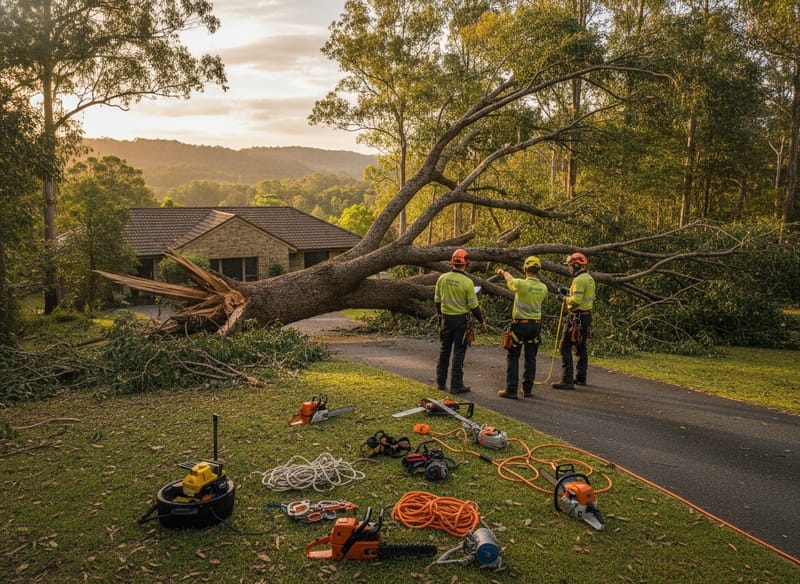
Removing heavy fallen timber from roofs quickly prevents further water leaks and structural collapse.
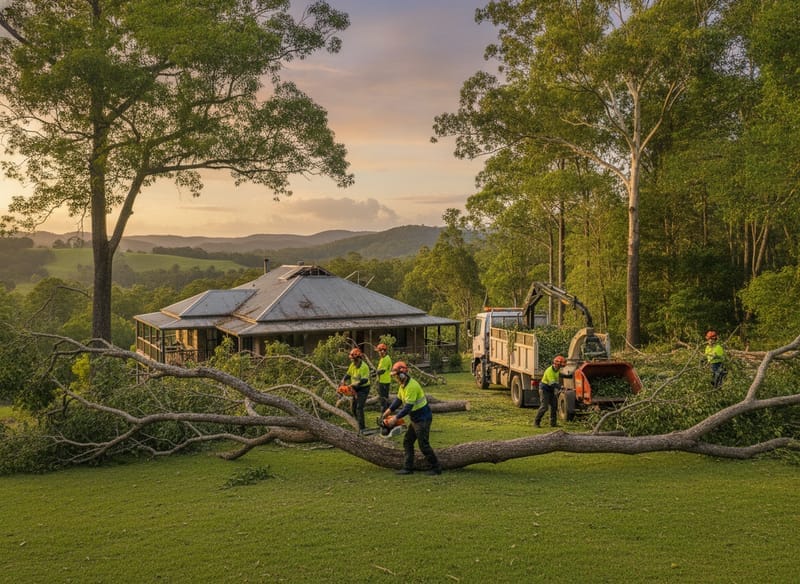
We make safe and clear fallen, dangerous, or storm-damaged trees impacting homes, driveways, and fences.
Prioritising high-risk, dangerous, and storm-damaged trees across Marian and surrounds.
When severe storms, waterlogged soils, or sudden structural failures cause a tree to fall, you need expert assistance. Our emergency tree removal Marian service is designed to stabilize dangerous trees, lift heavy trunks off structures, and clear blocked roads and driveways across the Pioneer Valley.
Our heavy monsoonal wet season from November to April turns Marian’s clay and river soils into a soft slurry. When combined with strong storm winds, this leads to massive whole-tree failures rather than simple branch drops, requiring heavy machinery to manage.
Removing heavy fallen timber from roofs quickly prevents further water leaks and structural collapse.
Get your vehicles, family, and emergency services moving by clearing blocked driveways.
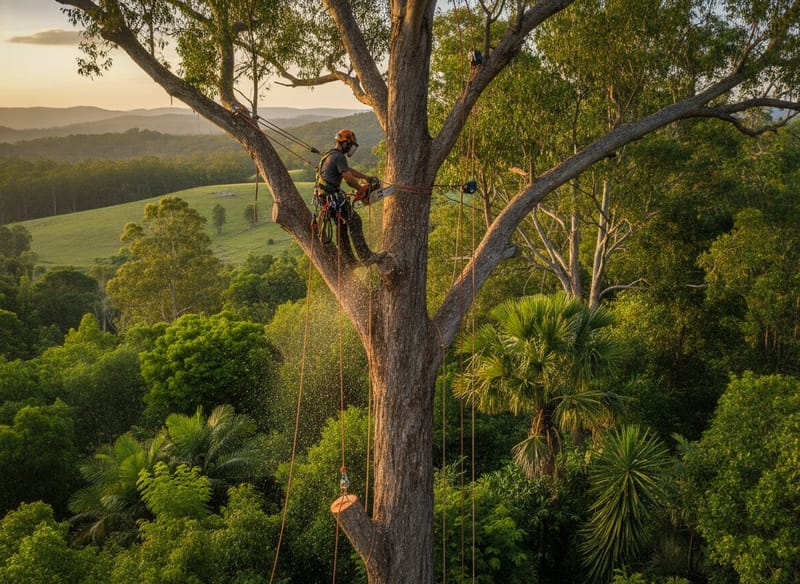
Have qualified climbers assess and stabilize split or hanging limbs before they fall on your property.
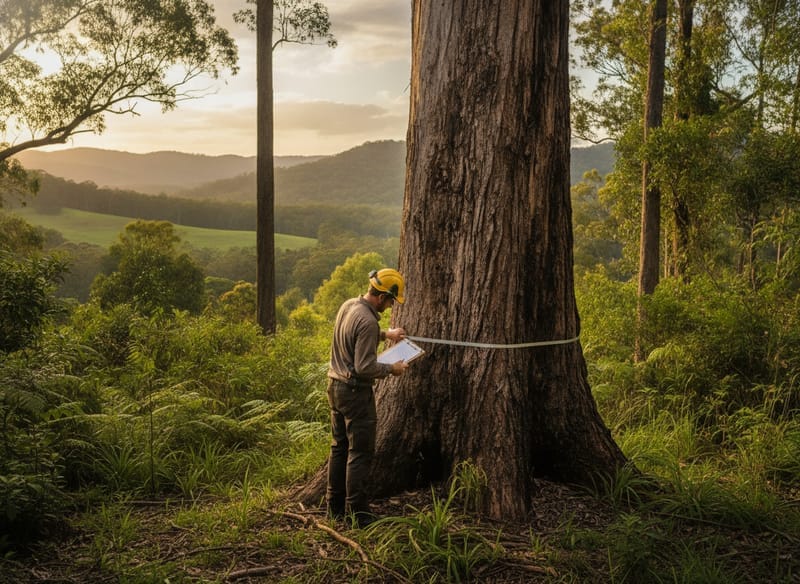
We assess the fallen tree for electrical hazards, tension, ground shifting, and load balancing before starting.
Using heavy-duty rigging ropes, winches, or cranes, we anchor the tree to prevent shifting during cuts.
We carefully remove branches and trunk sections, starting with the outer canopy to relieve structural pressure.
All processed green waste is run through the chipper, clearing pathways and restoring safety to your lawn.
When severe weather strikes the Pioneer Valley, rapid Emergency Tree Removal Marian property owners trust is critical to safeguarding family, livestock, and infrastructure. Marian is renowned for its expansive rural-residential acreage, historic Queenslanders, and sprawling cane properties bordered by towering native and exotic canopies. However, during the intense monsoonal wet season, heavy rainfall quickly saturates our alluvial soils, destabilising the root systems of massive trees. Our specialised crews respond across Marian and neighbouring districts like Walkerston, Mirani, and Pleystowe. Whether a mature Forest Red Gum has collapsed across your main access driveway, a brittle Poinciana has dropped heavy limbs through a shed roof, or a storm-damaged Raintree is threatening overhead power lines, we deploy dedicated heavy-duty equipment and qualified climbers. We prioritise immediate hazard containment and site make-safes, systematically eliminating life-threatening structural risks. Our team understands the unique pressures faced by local shift workers and rural landowners, delivering reliable, arborist solutions when emergency situations occur.
Attempting DIY tree clearance following a severe weather event is exceptionally hazardous. Storm-felled timber holds immense stored kinetic energy; twisted trunks and trapped limbs create volatile tension and compression zones. Slicing into a spring pole or bound limb without professional rigging often causes violent trunk splitting (barber-chairing) or sudden kickbacks, resulting in severe physical injury or crushed machinery. Unqualified contractors frequently lack the complex rigging gear and aerial access equipment required to safely extract multi-tonne boughs resting against rooflines or verandas. Improper cutting can shift weight loads onto already compromised building structures, turning minor roof impact into catastrophic structural collapse. Our team solves these critical hazards through systematic arborist protocols. Every emergency callout is led by AQF Level 3 climbing arborists trained in advanced sectional dismantling, mechanical advantage winching, and high-load rigging. We relieve stored timber stress progressively, stabilising the tree structure before making precision cuts that protect your home, outbuildings, and perimeter fencing from additional impact.
We deploy industry-leading arboricultural plant, technical rigging systems, and heavy-duty machinery specifically suited for the large timber and challenging acreage terrain found throughout Marian.
We utilise high-tonnage mechanical winches, 5:1 mechanical advantage pulley systems, and ground anchors to exert positive directional pull on leaning, uprooted, or structurally compromised trees, steering them safely away from houses, sheds, and power lines.
For massive limbs or fractured canopies suspended directly over roofs and outdoor living areas, our crews coordinate crane-assisted lifts to pick and hoist heavy timber sections clear of the structure without transferring shock loads or shifting balance points.
Our AQF Level 3 climbers access hazardous, storm-damaged crowns using advanced friction devices (port-a-wraps, rated arborist blocks, and dynamic rigging lines) to lower fractured hanging limbs (widow-makers) safely to the ground in tight access conditions.
We execute controlled bore-cuts, step-cuts, and top/bottom relief cuts on wind-thrown trunks and root plates to neutralise dangerous compression loads and avoid dangerous barber-chair failures during ground processing.
Our commercial 12-inch wood chippers, tipper trucks, and mini-loaders quickly process dense tropical storm debris, transforming bulky fallen crowns and fronds into clean organic mulch while rapidly clearing blocked driveways and paddocks.
When saturated alluvial soil causes root plate uplift, we carefully grind remaining root balls and destabilised stumps 150–300mm below grade, eliminating hazardous trip points, deep ground cavities, and pest-attracting timber.
When you contact us for an Emergency Tree Removal Marian callout, we initiate a structured emergency dispatch protocol designed to restore safety quickly. - Step 1: Rapid Mobilisation & Initial Site Appraisal: Our emergency team dispatches with fully equipped service trucks, typically arriving on-site quickly. We conduct an immediate 360-degree hazard assessment, identifying energised electrical lines, damaged utilities, structural impact points, and soil movement. - Step 2: Make-Safe Stabilisation: We secure the perimeter and apply tag lines or temporary support rigging to immobilise shifting limbs. If branches touch mains power, we coordinate safety protocols before proceeding. - Step 3: Controlled Sectional Removal: Our ticketed climbers or elevated work platform (EWP) operators systematically dismantle unstable branches and shattered trunks using AS4373-aligned target cuts and low-impact rigging. - Step 4: Ground Processing & Thorough Site Clearance: Fallen timber is bucked, processed through our chippers, and hauled away in our tipper trucks. We clear thoroughfares, clean gutters of dangerous debris, and leave the area safe and functional. - Step 5: Insurance & Council Documentation: We provide clear before-and-after photographic records, detailed itemised invoices formatted for insurance claims, and arborist statements to streamline policy settlements.
Safety in extreme storm conditions is non-negotiable. Our crews strictly adhere to the AS4373 (Pruning of Amenity Trees) standards and work within the safety frameworks set out in the Queensland Arboriculture Code of Practice. Every climber on our crew holds verified AQF Level 3 qualifications, alongside current Working at Heights (RIIWHS204D) and chainsaw felling certifications.
For complex planning requirements, our AQF Level 5 consulting arborist provides formal risk assessments and written reports. We are fully insured with comprehensive public liability cover and active WorkCover Queensland policies, giving homeowners and commercial asset managers complete peace of mind during high-risk emergency operations.
Operating in Marian requires extensive knowledge of the Pioneer Valley's distinctive climate and terrain. Between November and April, monsoonal weather delivers intense deluges that saturate our valley floor. When gale-force wind gusts hit, heavy-canopied species such as Raintrees (*Samanea saman*), African Mahoganies (*Khaya senegalensis*), and mature Forest Red Gums (*Eucalyptus tereticornis*) suffer sudden root-plate failure or massive branch shear. Navigating regulatory frameworks is straightforward with our team. Under the Mackay Region Planning Scheme 2017, emergency clearing provisions permit the removal of trees that represent an imminent hazard to life, property, or essential infrastructure without standard approval wait times. Additionally, following ex-Tropical Cyclone Koji, active state disaster clearing exemptions allow landholders to clear storm-damaged vegetation threatening safety and access through to January 2027. Note that street trees located on council verges remain strictly protected under Mackay Regional Council's Local Law 1 (Administration) 2011 and must be managed directly through council reporting channels unless an immediate life-safety clearance is mandated by emergency authorities.
Once the immediate emergency is cleared, proactive care is essential to protect remaining landscape assets: - Inspect Surrounding Trees for Hidden Damage: High-velocity winds create internal fractures, canopy tears, and root-shearing that may not be obvious. Have our arborists inspect adjacent trees for compromised branch unions. - Avoid Harmful Tree Lopping: Never allow uncertified contractors to top or lop storm-damaged crowns. Lopping triggers weak, poorly attached epicormic growth that fails easily in future storms. - Establish Routine Pre-Cyclone Pruning: Schedule formative pruning and selective deadwood removal annually under AS4373 standards before the wet season begins to reduce wind drag. - Apply Quality Organic Mulch: Spread fresh woodchip mulch 75–100mm deep across root zones, keeping it clear of the direct trunk base, to retain moisture and encourage soil biology recovery after heavy compaction.
Emergency tree clearing costs reflect the danger level, the required safety rigging, and the time needed to secure the site.
We supply clear, upfront pricing based on the immediate hazard level and the equipment needed to make the site safe.
We manage storm and emergency tree clearing throughout the Pioneer Valley and broader Mackay area.
Contact our local crew now for reliable, safety-first hazard clearing.
Call 0495 090 664