Maximised Storm Resilience
Lighten top-heavy crowns to ensure your valuable shade trees survive high winds and monsoonal storms without splitting.
Enhance tree health, structural integrity, and storm resilience with AS4373-compliant pruning by local qualified arborists.
Servicing Mirani and surrounding Pioneer Valley residential and rural areas.
Proper tree pruning in Mirani is not just about cutting branches; it is about maintaining structural integrity, improving appearance, and ensuring safety.
Our local wet tropics climate means trees put on wood incredibly fast. Fast growth often leads to heavy, overextended limbs on Poincianas and Mango trees that are highly susceptible to sudden limb drop on hot, humid afternoons.
Lighten top-heavy crowns to ensure your valuable shade trees survive high winds and monsoonal storms without splitting.
Allow sunlight to reach your understorey garden and lawn while improving breeze penetration across your home.
Prevent decay from entering major stems by making clean, correct pruning cuts that the tree can easily seal over.
We evaluate the tree species, structural health, and identify specific branches requiring attention.
We design a plan detailing which parts of the canopy will be thinned, lifted, or reduced to meet AS4373 guidelines.
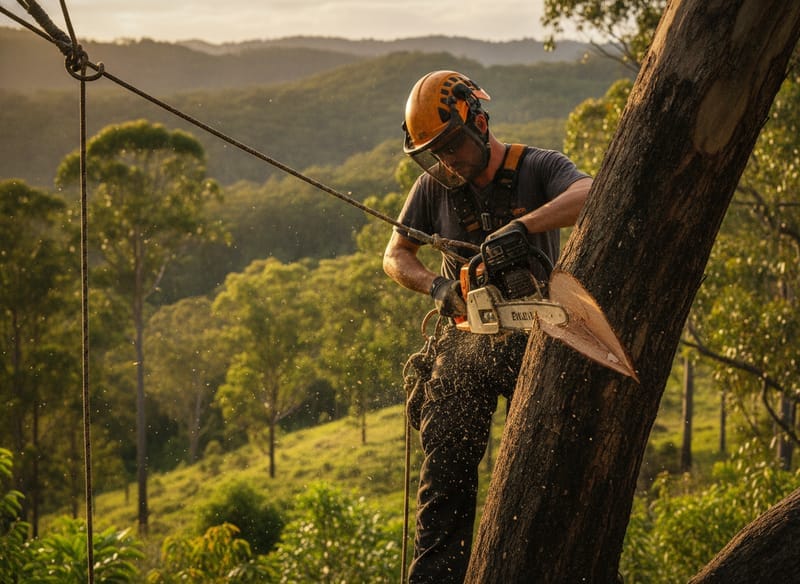
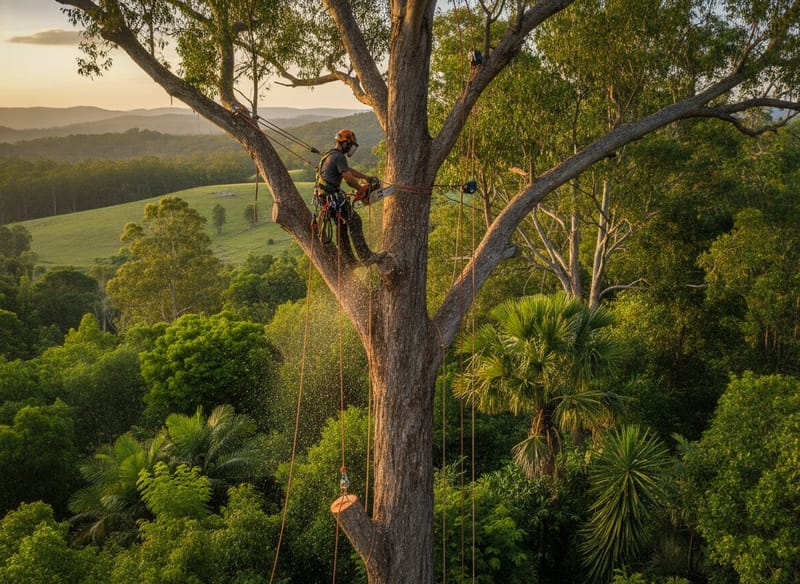
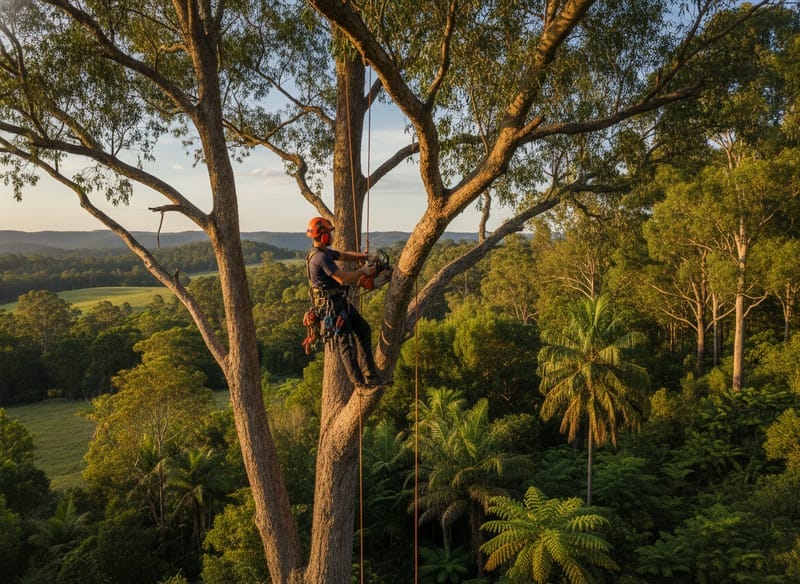
Our certified climbers use modern rope access or elevated work platforms to perform precise, clean pruning cuts.
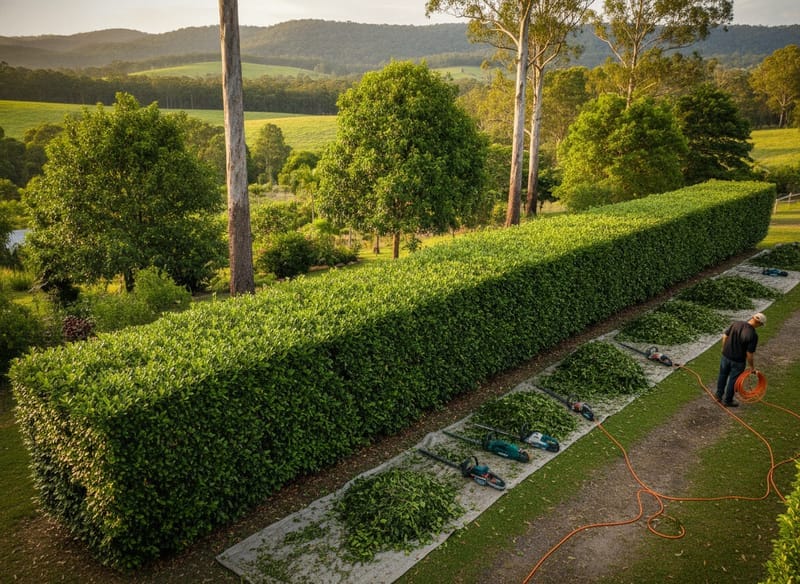
All trimmed branches are mulched on-site. We clean the area thoroughly, leaving no leaves or twigs behind.
When managing established shade trees and broad canopies on rural residential blocks, professional Tree Pruning Mirani property owners can rely on is essential for long-term safety and tree vitality. Mirani's position in the Pioneer Valley features fertile alluvial soils, warm temperatures, and substantial seasonal rainfall that drive rapid vegetative growth. Large heritage raintrees, spreading poincianas, and productive backyard mango trees quickly outgrow their space, encroaching on sheds, overhead lines, and homestead roofs. Our qualified arborists provide specialised pruning services tailored to the unique conditions of Mirani and neighbouring communities like Marian, Walkerston, and Gargett. Rather than indiscriminately hacking branches, we focus on structural pruning that preserves tree health, enhances natural form, and reduces wind resistance before severe weather hits. Whether you manage a multi-acre homestead near the Pioneer River or an established suburban lot in town, our team brings the heavy-duty machinery, climbing equipment, and botanical knowledge needed to manage your trees safely.
A common mistake made on Pioneer Valley properties is hiring unqualified operators to 'lop' or 'top' large trees. Lopping involves indiscriminate heading cuts that leave blunt stubs, severing the natural branch collar. This traumatic practice triggers a rapid burst of weakly attached epicormic shoots, which grow fast in our tropical climate but lack strong internal wood connections, becoming extreme hazards during high winds. In contrast, professional tree pruning adheres strictly to Australian Standard AS4373-2007 (Pruning of Amenity Trees). Our approach uses target pruning techniques that respect the tree's natural compartmentalisation mechanisms. By cutting precisely outside the branch collar, we allow the tree to seal wounds naturally, preventing fungal decay and wood-boring pests from penetrating the heartwood. Proper pruning reduces canopy sail area without destroying the tree's structural integrity. By selecting secondary and tertiary lateral branches to thin or reduce, we allow wet-season storm winds to pass cleanly through the canopy, drastically lowering the risk of whole-tree failure or unexpected limb drop across your driveways, fencing, or living areas.
All pruning work performed by our team strictly complies with AS4373-2007 standards, utilising proper target pruning techniques to maintain tree health, structural balance, and property safety.
The selective removal of smaller tertiary and secondary branches (up to a maximum of 20–25% of live foliage) evenly throughout the canopy. This technique reduces wind resistance and canopy weight while improving light penetration and airflow, without altering the tree's overall height or natural framework.
The systematic removal of dead, dying, diseased, or broken limbs throughout the canopy. This is critical for mature eucalypts, figs, and raintrees positioned over dwellings, driveways, children's play areas, and machinery sheds to eliminate sudden falling hazards.
The selective pruning of lower scaffold and lateral branches to raise the clearance height beneath the canopy. Commonly performed along Mirani driveways, rural access roads, and paddocks to provide unimpeded clearance for tractors, horse floats, caravans, and lawn care equipment.
The careful shortening of overextended or excessively heavy limbs by cutting back to a healthy lateral branch that is at least one-third the diameter of the parent stem. Unlike topping, this preserves the natural branch union and avoids creating decay-prone stubs.
Proactive structural training applied to juvenile and semi-mature trees. We eliminate competing co-dominant stems, remove crossing branches, and encourage a single dominant leader, preventing costly structural defects and stem splits later in the tree's life.
Precision pruning designed to clear branches away from specific targets such as rooflines, gutters, solar panel systems, outbuildings, and overhead private service wires, maintaining mandatory clearance buffers without compromising tree form.
Every tree pruning project begins with a comprehensive on-site consultation at your Mirani property. We examine the tree's species, growth habit, root plate stability, and proximity to buildings or overhead infrastructure, identifying dead wood, hollows, or fungal brackets. Once we determine the appropriate AS4373 pruning specifications, we supply a transparent, fixed-price quote detailing the exact scope of works. On work day, our crew establishes drop zones and ground protection around sensitive turf, garden beds, or septic fields before deploying rope access systems or our mobile elevated work platform. Our climbers make precise cuts at the branch collar using sharp, pro-grade climbing saws. Ground crew members process cut limbs through our commercial wood chipper, converting green waste into clean, valuable mulch. After the cuts are complete, we rake, blow down hard surfaces, and leave your grounds spotless, leaving you with healthy, balanced trees and fresh organic mulch if requested.
Tree work in dense canopies and around high-value rural infrastructure carries significant inherent risk. Our climbing teams hold AQF Level 3 in Arboriculture, ensuring advanced rigging capabilities, modern chainsaw operation skills, and deep botanical expertise on every site. For statutory tree assessments, development applications, and complex risk evaluations, our AQF Level 5 consulting arborist provides formal arborist reports meeting council submission criteria.
We operate with comprehensive safety systems, maintaining fully compliant tickets in Working at Heights (RIIWHS204D), Elevating Work Platforms, and First Aid. Our operations are backed by complete public liability insurance and full WorkCover protection, giving property owners total peace of mind while our crews work on-site.
Performing Tree Pruning Mirani wide requires a thorough understanding of the local Pioneer Valley environment. The monsoonal wet season from November to April dumps heavy rainfall across the valley, softening alluvial ground just as cyclone and severe storm systems bring gale-force winds. Large species like Poinciana (*Delonix regia*), Mango (*Mangifera indica*), Raintree (*Samanea saman*), and Forest Red Gum (*Eucalyptus tereticornis*) experience explosive growth during these humid months, rapidly loading upper limbs with excess weight.
Local governance under the Mackay Region Planning Scheme 2017 includes biodiversity and environmental significance overlays that can regulate clearing and severe alteration of remnant vegetation. However, routine maintenance pruning following AS4373 is generally permitted. Furthermore, under current post-Tropical Cyclone Koji disaster clearing provisions (effective through January 2027), landholders have defined pathways to clear storm debris and hazardous limbs. For street trees on council verges, Mackay Regional Council retains sole management under Local Law 1 (Administration) 2011, requiring council notification rather than private pruning.
Following pruning, your trees will benefit from basic aftercare to promote natural wound occlusion. Spread a 75–100mm layer of fresh arborist woodchips over the root zone, keeping the mulch pulled back 100mm from the trunk collar to prevent bark rot. This conserves moisture in the Pioneer Valley heat and enriches soil microbiology. Monitor your trees through the wet season for signs of unexpected epicormic growth, pest infestation, or storm deflection. We recommend scheduling cyclical pruning inspections every 12 to 24 months for fast-growing tropical species like poincianas and raintrees, ensuring canopies remain structurally sound, well-balanced, and resilient year after year.
Our pricing for tree pruning reflects the scale of the canopy and the complexity of accessing the branches safely.
We provide transparent, fixed-price quotes with clear explanations of what limbs will be pruned, ensuring complete peace of mind.
We provide professional, AS4373 tree pruning across Mirani and surrounding communities.
Contact us today to arrange a professional assessment by our certified arborists.
Book a Pruning Quote