Restored Property Safety
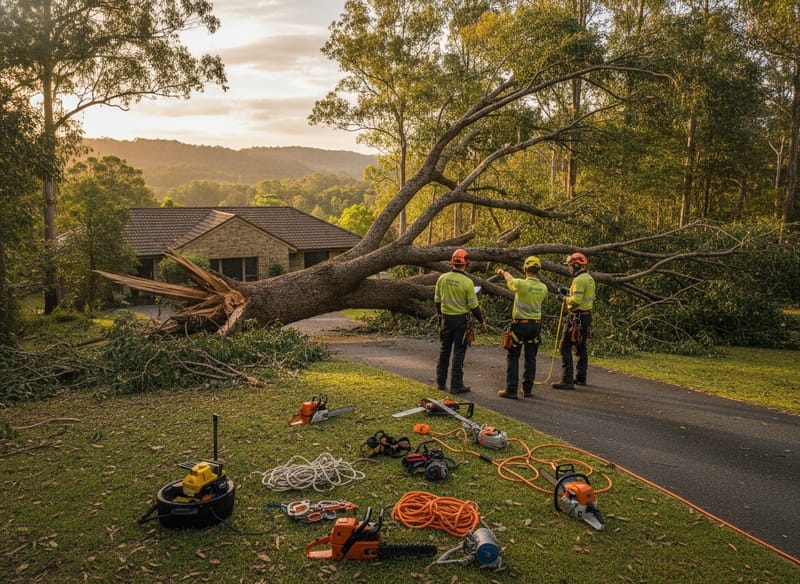
Eliminates lingering hazards like cracked branches or unstable root plates in your yard.
Post-storm cleanup, canopy stripping, and safe removal of storm-damaged trees in Mount Pleasant.
Serving Mount Pleasant, Beaconsfield, Glenella, and Mackay region.
Severe weather, high monsoonal wind gusts, and severe cyclones leave widespread destruction across tropical canopies. Our storm damage tree removal Mount Pleasant service cleans up damaged trees, shattered limbs, and root-failed trunks. We systematically dismantle unstable timber and clear yards so property owners can recover quickly.
Mount Pleasant experienced heavy rain and winds during ex-Tropical Cyclone Koji. Saturated ground softens tree root holds, leading to delayed tree falls days after a weather system passes. Professional inspection ensures post-storm stability.
Eliminates lingering hazards like cracked branches or unstable root plates in your yard.
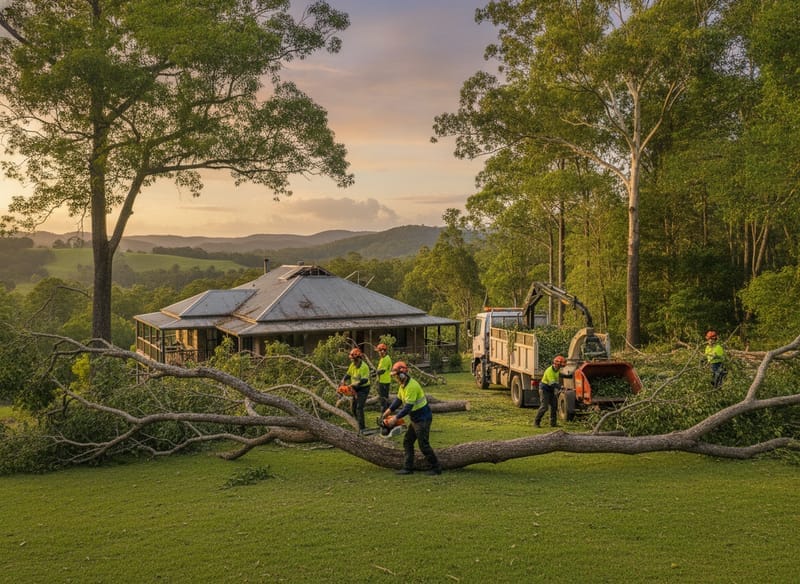
Clears massive volumes of scattered green waste, fronds, and limbs efficiently.
Identifying tree tensions, root movement, and hanging branches.
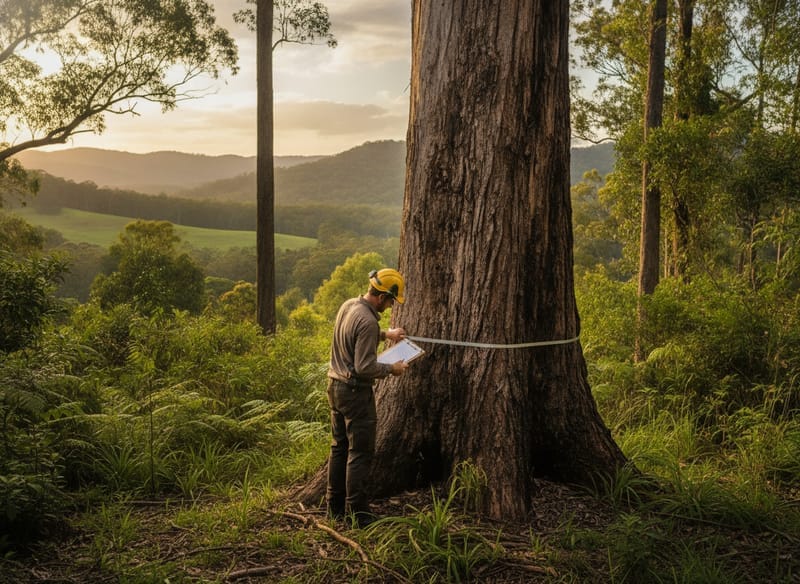
Taking photos of structural damage to assist with your insurance claim paperwork.
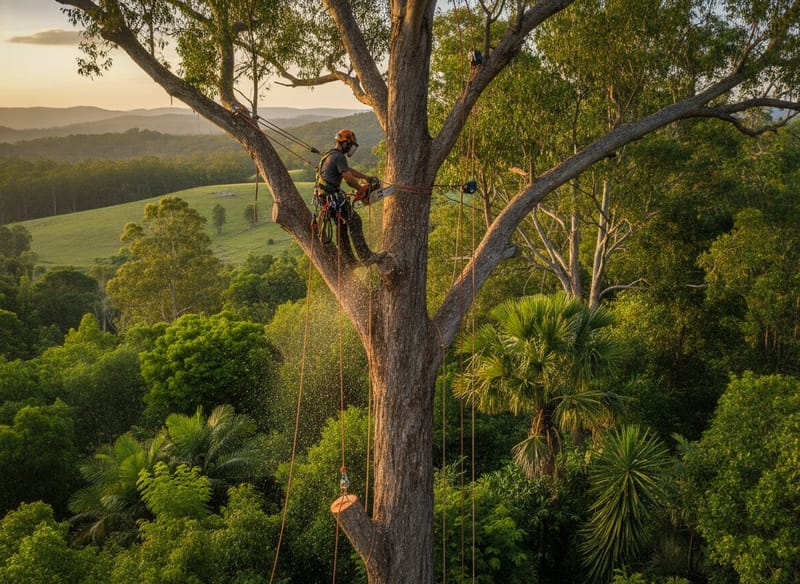
Cutting wood under tension carefully to avoid kickback or uncontrolled limb movement.
Mulching storm waste and restoring order to your garden paths and lawns.
When severe tropical weather strikes the Pioneer Valley and coastal Mackay, prompt and expert Storm Damage Tree Removal Mount Pleasant becomes essential for securing residential and commercial properties. Mount Pleasant features established suburban blocks, steep elevated gullies near the ridge lines, and mature tree canopies. During our intense monsoonal wet season from November through April, waterlogged soils combined with cyclonic gusts frequently cause root plate failures and severe branch tearing. Our team provides dedicated emergency tree services throughout Mount Pleasant, Glenella, and North Mackay. We arrive with purpose-built machinery, heavy-duty chippers, and certified climbing crews capable of handling dangerous fallen timber, snapped trunks, and split limbs resting on roofs, fences, or access ways. We take control of volatile storm-damaged trees swiftly, restoring safety and access while minimising secondary structural impact.
Storm-damaged timber presents complex kinetic hazards that differ drastically from standard tree felling. Trees blown over in high winds or crushed beneath fallen neighbours store massive amounts of unseen tension and compression. When untrained property owners attempt DIY clearing with a chainsaw, cutting a bound limb or "spring pole" can release violent stored energy instantly, kicking back chainsaws or rolling heavy trunk sections unexpectedly.
Another significant risk involves unstable root plates. When a partially uprooted tree has its canopy cut off improperly, the counterweight of the root ball can suddenly pivot the trunk back into the hole, crushing anything beneath it. Furthermore, hanging broken branches—known as widowmakers—remain lodged high in the canopy, waiting for a slight breeze to fall.
Our qualified AQF Level 3 arborists eliminate these risks. We evaluate internal fiber stresses, install mechanical tag lines, and use advanced rigging techniques to relieve tension systematically. We secure compromised canopies safely without endangering residents or causing additional damage to power services, sheds, and homes.
Our storm damage operations rely on systematic engineering principles, specialised arborist rigging, and compliant tree dismantling techniques.
We use heavy-duty arborist rigging blocks, friction bollards, and dynamic synthetic winch ropes to anchor, stabilise, and dismantle fractured limbs that are under severe compression or lodged over structures.
For large trees that have fallen directly onto buildings or unstable ground, we deploy mobile cranes to lift massive wood sections vertically, preventing further roof collapse or structural scraping.
Partially uprooted root balls are secured using mechanical winches and heavy ground anchors before cutting, eliminating sudden trunk rollback and soil collapse.
Where a damaged tree can be conserved, we perform branch collar target cuts and selective crown thinning in strict compliance with AS4373-2007 (Pruning of Amenity Trees), avoiding destructive topping.
We utilise commercial 12-inch disc and drum wood chippers alongside high-sided tippers to process large volumes of storm debris and green waste rapidly on-site.
Comprehensive visual ground and aerial assessments are conducted across all remaining standing trees to identify hidden shear cracks, root detachment, and trunk hollows.
Executing Storm Damage Tree Removal Mount Pleasant requires a structured, multi-tier process to guarantee efficiency and safety from the first call to the final sweep. 1. Emergency Triage & Hazard Assessment Upon arriving at your Mount Pleasant property, our arborist conducts a rapid risk triage. We inspect for live electrical hazards, structural stability, secondary hung-up limbs, and ground tension. We classify urgent threats to life, property, and primary driveway access as Priority 1. 2. Insurance Documentation & Quoting We document all visible damage with clear photographic evidence and provide detailed, itemised written quotes formatted specifically for smooth insurer and loss-adjuster approvals. 3. Site Exclusion & Make-Safe Rigging We establish an exclusion drop zone around the work area. Our climbers and ground crews rig guide lines, winches, and rigging hardware to secure shifting stems before cutting begins. 4. Systematic Sectional Removal Using professional climbing saws and ground powerheads, our climbers de-weight the canopy piece by piece, lowering heavy timber safely away from your home, fences, and garden. 5. Chipping, Log Haulage & Site Cleanup All branches are processed through our high-capacity chipper. Heavy logs are loaded via cranes or loaders, and the entire area is raked and blown clean, leaving your yard clear and completely secure.
Our operations adhere strictly to Australian Standard AS4373-2007: Pruning of Amenity Trees and Workplace Health and Safety guidelines. We maintain comprehensive public liability insurance and full WorkCover for all employees. Every complex climb and structural dismantle is led by certified AQF Level 3 arborists, with detailed hazard documentation supported by AQF Level 5 consulting arborists where insurer or legal sign-offs are needed. Following severe cyclonic events like ex-Tropical Cyclone Koji, state disaster clearing exemptions allow landholders across the Mackay Disaster District to clear immediate storm hazards and maintain infrastructure without protracted approvals. When non-emergency pruning or removal intersects with the Mackay Region Planning Scheme 2017 environmental overlays, we ensure every cut is fully defensible and compliant with local regulations.
Mount Pleasant is characterised by elevated residential pockets, undulating cul-de-sacs, and established backyards hosting large, mature trees. The local red volcanic and alluvial soils become heavily saturated during Mackay's monsoonal season, significantly reducing root cohesion. High wind events frequently destabilise wide-spreading species such as poinciana (*Delonix regia*), backyard mango (*Mangifera indica*), and mature African mahogany (*Khaya senegalensis*).
Poincianas are notorious for brittle wood that shears under sudden gale gusts, while top-heavy mango trees often suffer whole root-plate heave in sodden ground. On larger blocks near the edges of Mount Pleasant and Richmond, tall forest red gums (*Eucalyptus tereticornis*) and paperbarks (*Melaleuca*) can drop heavy deadwood directly over rooflines and outbuildings.
Our crews understand the steep access drives, narrow side boundaries, and specific wind tunnels common to Mount Pleasant ridge properties. We bring the right compact spider lifts and specialized rigging equipment to navigate confined yards without damaging lawns, driveways, or underground services.
Once the immediate storm damage has been cleared, surviving trees require ongoing monitoring. Storm winds often create internal trunk fractures and tear branch collars that are not visible from the ground. Over the following months, trees may produce dense clusters of weakly attached epicormic shoots that become future hazard points if left unmanaged. We recommend having your property inspected annually prior to the start of the Mackay storm season in October. Our team can carry out targeted formative pruning, deadwood removal, and canopy weight reductions to let storm winds filter safely through your trees rather than tearing them down.
Storm damage cleanup cost is based on volume, hazards present, and machinery needed.
We provide transparent, itemised quotes suitable for insurance submissions.
Clearing storm-damaged trees across Mount Pleasant and nearby suburbs:
Contact our experienced local tree team today for safe, prompt post-storm clearing.
Get Your Free Quote