Controlled Tree Size
Limits foliage encroachment on roofs, fences, gutters, and overhead service cables.
Professional canopy height reduction and tree management tailored for Mount Pleasant properties.
Serving Mount Pleasant, Glenella, Beaconsfield, and nearby Mackay suburbs.
When property owners search for tree lopping Mount Pleasant, they are generally seeking effective ways to handle tall, overgrown trees threatening roofs or blocking light. While flush 'topping' or flush lopping causes decay and unsafe shoots, our qualified team delivers genuine canopy reduction and structural trimming that achieves your space goals safely.
Fast-growing tropical species like Poincianas and African Mahoganies in Mount Pleasant can quickly grow out of proportion to residential yards. Managing their height requires proper reduction techniques rather than heavy topping to avoid weak storm-vulnerable regrowth.
Limits foliage encroachment on roofs, fences, gutters, and overhead service cables.
Avoids the formation of unstable water sprouts caused by indiscriminate tree topping.
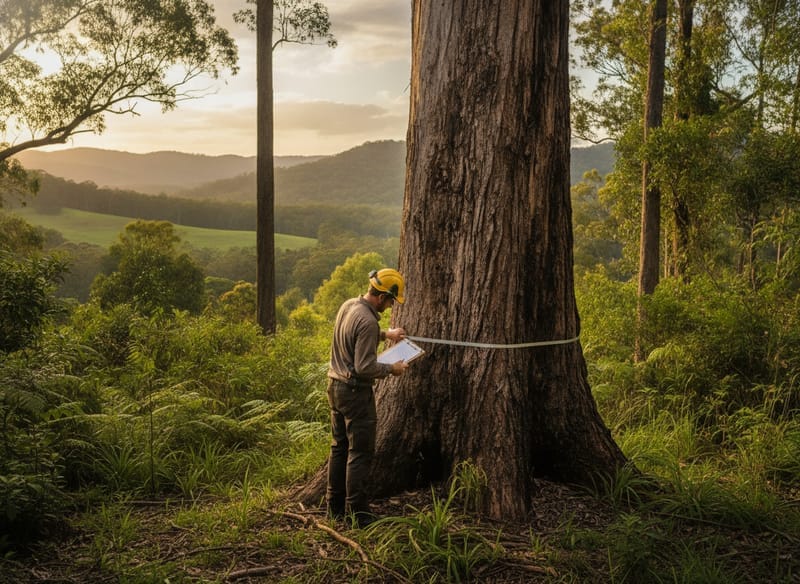
We inspect your trees to determine whether reduction pruning or full removal is best.
Recommending precise cut zones to reduce height while keeping the tree structurally sound.
Pruning heavy limbs back to strong lateral branches to maintain proper growth control.
Processing all green material through our wood chipper and raking the lawn clean.
When searching for reliable Tree Lopping Mount Pleasant property owners frequently find themselves managing rapidly growing canopies that threaten rooftops, power lines, and fence boundaries. Mount Pleasant's elevated residential ridges, sloping blocks near the Mackay Golf Club, and established family properties feature extensive tree growth that thrives in our warm tropical conditions. Large backyard mango trees, spreading poincianas, and towering eucalypts require regular height management and branch containment to keep residential living spaces safe and manageable.
While everyday homeowners use the phrase lopping when they need their trees cut back or reduced in size, our approach delivers precision canopy reduction and selective pruning. We do not simply hack off branches with blunt topping cuts. Our qualified arborists evaluate the biological structure of your trees to safely reduce volume, open up sightlines, clear service cables, and eliminate hazard limbs while safeguarding the long-term structural integrity of your landscape assets across Mount Pleasant and neighbouring North Mackay.
Traditional or unqualified tree lopping—often referred to in arboriculture as topping or heading back—creates catastrophic long-term problems for your property. When inexperienced operators make indiscriminate flush cuts across primary scaffold limbs, the tree enters an emergency survival response. It produces dense clusters of weakly attached epicormic shoots. In Mount Pleasant's high-humidity wet season, these rapid-fire shoots grow rapidly into heavy branches that possess almost no structural collar wood, turning them into severe failure risks during monsoonal storm events. Furthermore, flat lopping cuts leave broad, open wounds that cannot seal through natural branch compartmentalisation (CODIT). In Mackay's tropical climate, wood-decay fungi and boring insects rapidly colonise these exposed stubs, hollowing out trunk interiors and permanently destabilising the tree. Our team solves this through rigorous adherence to the Australian Standard AS4373-2007 (Pruning of Amenity Trees). Our approach to Tree Lopping Mount Pleasant homeowners rely on replaces indiscriminate hacking with engineered crown reduction, selective canopy thinning, and crown lifting. We make precise target cuts outside the branch bark ridge and collar. This technique reduces height, controls canopy spread, and removes heavy leverage from overhanging limbs while protecting the tree against decay, weak regrowth, and premature failure.
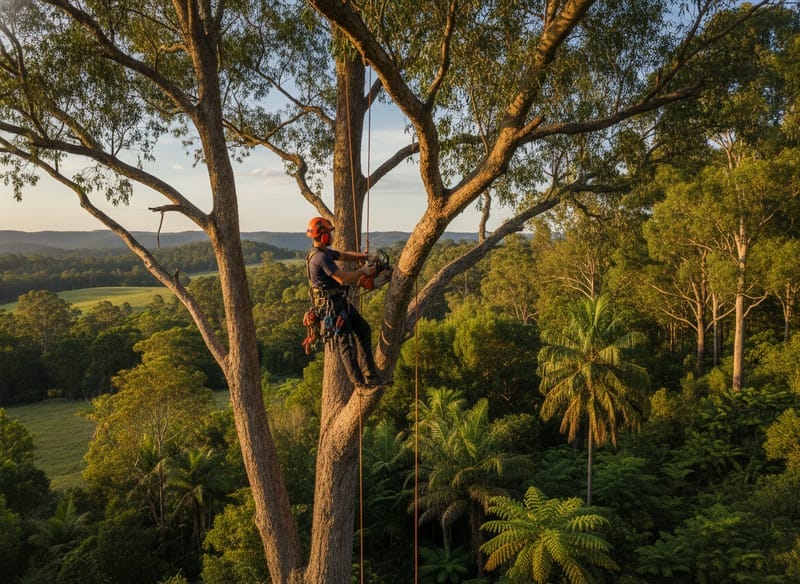
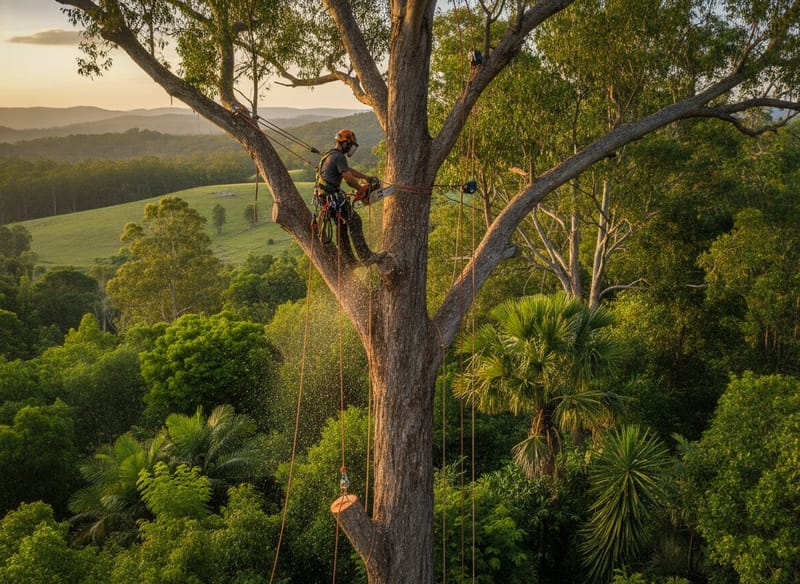
We use specialised arboricultural techniques and commercial rigging equipment to execute canopy reduction, clearance pruning, and structural trimming across all residential and commercial sites in Mount Pleasant.
Engineered reduction of overall canopy height and lateral spread by cutting branches back to healthy, lateral growth points that are at least one-third the diameter of the parent stem. Live crown removal is capped at 20-30% in a single season to prevent photosynthetic shock and severe epicormic shoot development.
Systematic removal of lower secondary and primary branches to elevate the canopy base. Provides statutory clearance over Mount Pleasant driveways (typically 3.0 to 4.5 metres), pedestrian footpaths (2.4 metres), rooflines, solar panel arrays, and service wire corridors.
Selective thinning of secondary and tertiary interior branches throughout the outer crown. Reduces wind resistance and sail effect by up to 35% without altering the natural architectural habit of the tree, allowing cyclonic wind gusts to pass through rather than levering the root plate.
Targeted reduction or removal of over-extended, structurally compromised, or co-dominant stems. Controlled dismantling using dynamic rigging lines, friction bollards, and directional pulling to avoid impacts on underlying roofs, retaining walls, sheds, or manicured gardens.
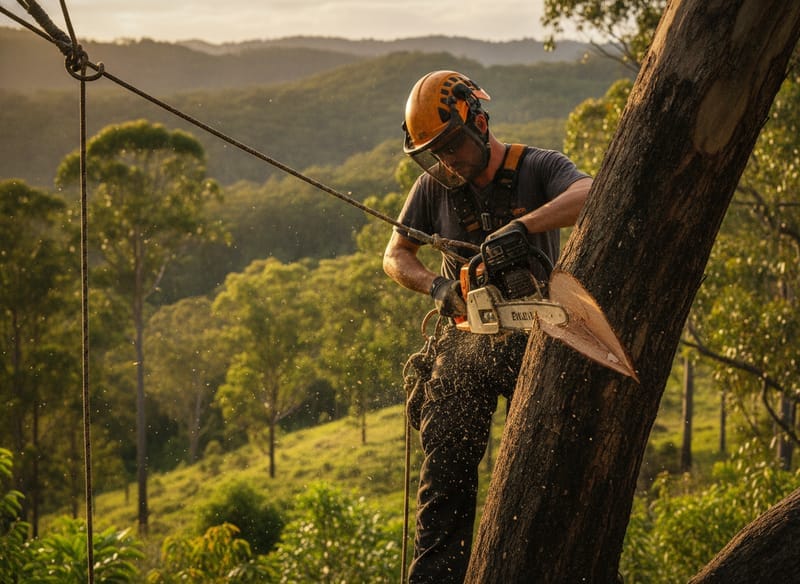
Where a tree has outgrown its urban footprint or suffered unrecoverable decay, our climbers systematically lop, section, and lower branches in controlled stages. Performed using specialised top-handle chainsaws and rigging equipment prior to flush-level felling and stump grinding.
Every canopy management project in Mount Pleasant follows a systematic, safety-first workflow designed to deliver pristine results with zero property disturbance.
Tree trimming and canopy dismantling involve serious elevated risks that demand formal qualifications and professional safety management. Our operations are performed under the direction of qualified AQF Level 3 arborists and backed by AQF Level 5 consulting arborist oversight for complex technical assessments.
Every project strictly adheres to AS4373-2007 (Pruning of Amenity Trees) and AS4970-2009 (Protection of Trees on Development Sites). We maintain full WorkCover compliance and hold comprehensive public liability insurance coverage. Our climbers and ground crew hold current high-risk licences, including Working at Heights (RIIWHS204D), Elevating Work Platform operation, Chainsaw cross-cut and felling certifications, and First Aid qualifications, ensuring flawless safety across every private and commercial work zone.
Mount Pleasant features a mix of undulating residential streets, established suburban blocks, and elevated ridge-top properties exposed to prevailing coastal winds. Managing trees in this area requires acute awareness of local growing habits and Mackay's sub-tropical wet season dynamics. Backyard Mango trees (*Mangifera indica*) are widespread across Mount Pleasant and frequently demand regular crown reduction to prevent fruit drop from clogging gutters and heavy limb breakage under crop weight. Sprawling Poincianas (*Delonix regia*) in older gardens develop massive surface roots and wide, brittle lateral branches that can easily fail in strong gusts unless thinned. Fast-growing African Mahogany (*Khaya senegalensis*) and native Forest Red Gums (*Eucalyptus tereticornis*) on larger allotments require regular clearance pruning from overhead utility assets. When planning tree work, council regulations must be respected. Under the Mackay Region Planning Scheme 2017, vegetation clearing overlays can restrict removal on mapped biodiversity or environmental significance corridors. Furthermore, any tree situated on council verges or road reserves is strictly protected under Local Law 1 (Administration) 2011. Following severe weather, property owners can utilise the disaster clearing exemption declared under the Mackay Disaster District (running until 13 January 2027) for verified immediate hazards. We assist you in navigating all address checks and compliance documentation before starting.
After completing canopy reduction or crown lifting, post-pruning care ensures your trees recover vigorously without succumbing to stress or pests in our tropical heat. - Mulching: Spread an even layer of aged, coarse arborist woodchips (75–100mm deep) around the root zone, keeping mulch 100mm away from the direct trunk collar to prevent collar rot. - Moisture Management: Maintain deep, infrequent watering during the dry spring months leading up to the wet season to encourage deep root stability. - Epicormic Shoot Monitoring: Inspect major cut points every 3 to 6 months. In fast-growing species like Poinciana and Mango, selectively remove dense water shoots early before they become heavy, unattached limbs. - Re-Inspection Scheduling: We recommend re-assessing structural canopy growth every 12 to 24 months, or having our climbers carry out a rapid safety check following severe storm systems.
Height reduction and canopy trimming costs vary based on tree height and canopy density.
We offer clear, fixed-price quotes prior to commencing any canopy reduction work.
Providing canopy reduction and tree management throughout Mount Pleasant and neighbouring areas:
Contact our local arborist team for professional canopy reduction solutions today.
Get a Free Quote