Safe Height Reduction
Lowers tree profiles to protect roofs from overhanging branches during severe monsoonal winds.
Looking for tree lopping in North Mackay? We provide qualified canopy reduction and height control that keeps trees safe and healthy.
Serving North Mackay, Mount Pleasant, West Mackay, and surrounding suburbs.
Homeowners often search for Tree Lopping North Mackay when trees become too large for their yards. While traditional 'lopping' or flush topping damages tree structures, our qualified arborists perform proper canopy reduction pruning that achieves your goal of reducing height and bulk without compromising tree stability.
Fast-growing tropical species like poinciana, mango, and fig trees quickly outgrow North Mackay suburban residential blocks. Heavy topping creates dense masses of weak regrowth that snap easily in cyclone season. Our arborists use target reduction pruning to keep your canopy manageable and wind-resistant.
Lowers tree profiles to protect roofs from overhanging branches during severe monsoonal winds.
Avoids the weak, dangerous branch attachments caused by crude topping cuts.
Opens up overgrown canopies to bring back sunlight to understorey lawns and garden areas.
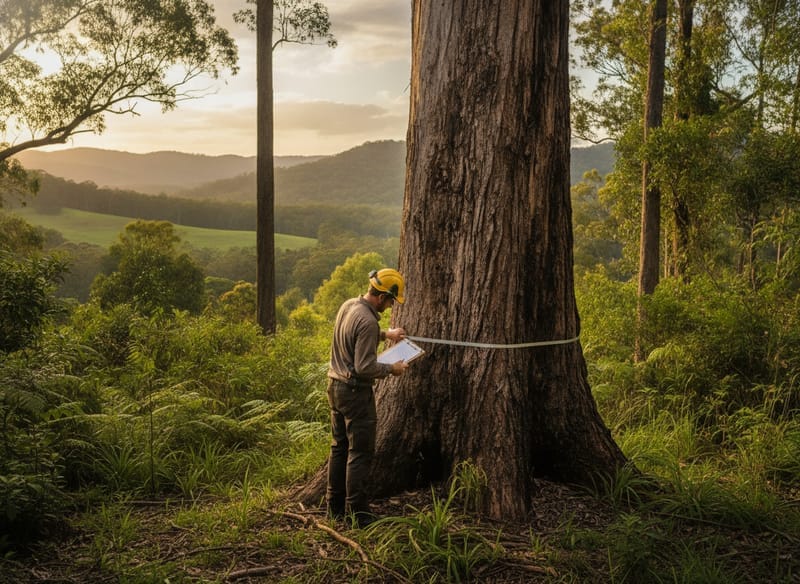
We evaluate the tree's health, species, and structural response to canopy reduction.
We identify healthy lateral branches to cut back to, preserving tree aesthetics and health.
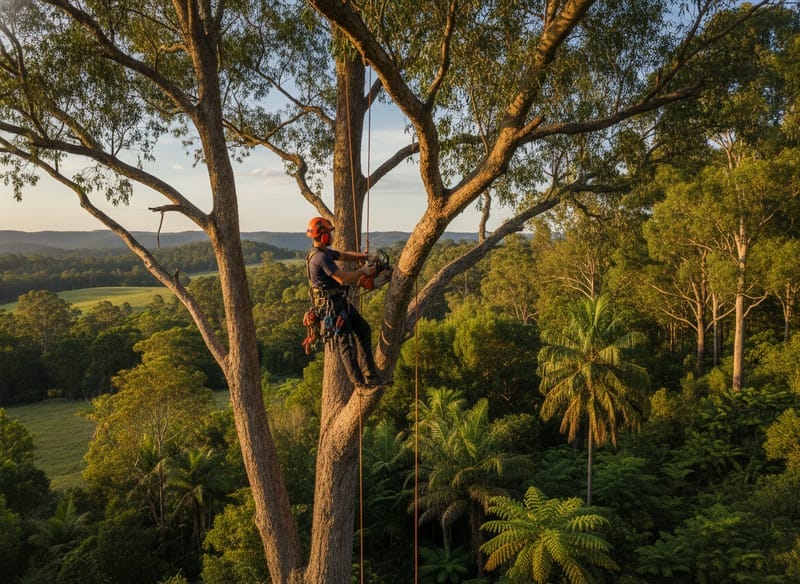
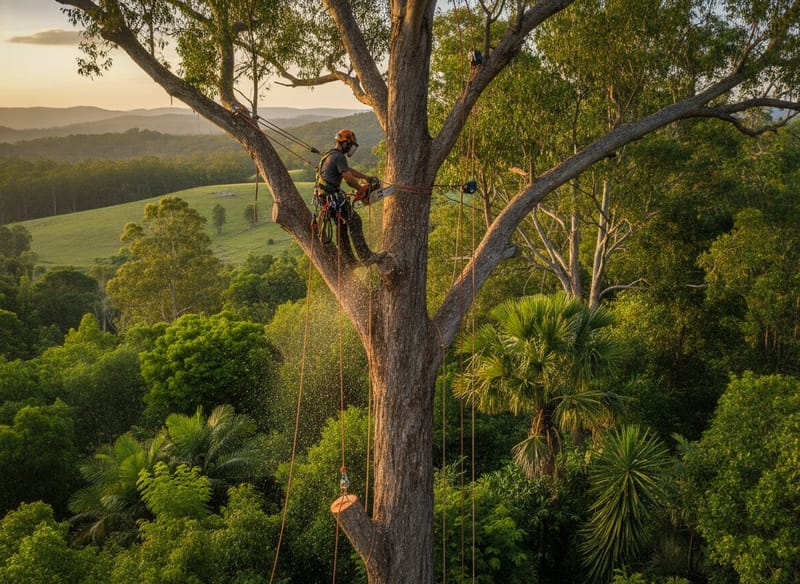
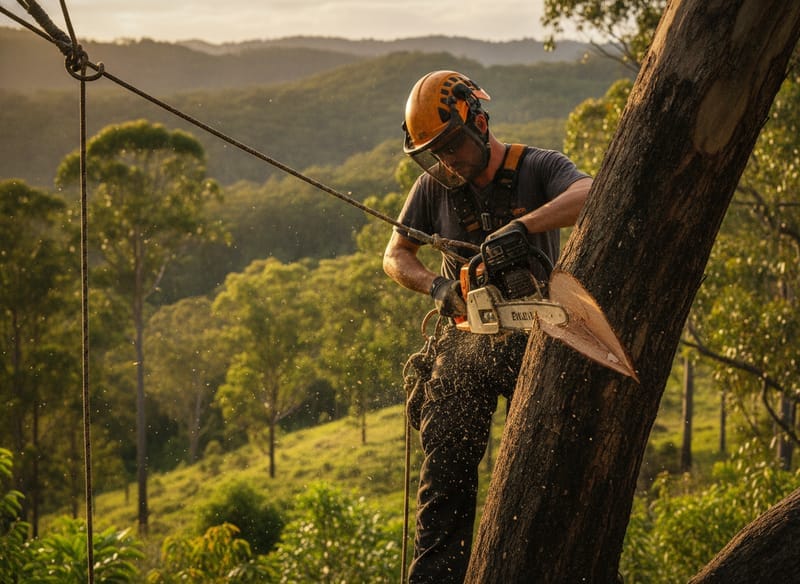
Arborists cut branches cleanly at correct nodes, using ropes to lower heavy wood safely.
All cut branches are processed through the woodchipper and the site is left clean.
When homeowners and property managers request Tree Lopping North Mackay, they are almost always looking to regain control of an overgrown canopy, reduce heavy shade over solar panels, or clear branches threatening tin roofs before the next monsoonal storm. In North Mackay, older character homes along Evans Avenue, Malcomson Street, and Palmer Street sit beneath towering mature trees like poinciana, backyard mango, and spreading figs. As these trees expand, their heavy horizontal limbs can easily encroach on powerlines, overhang boundary fences, or pose structural failure risks during severe weather events.
While traditional lopping or crude topping severely damages a tree's health, our certified arborists deliver targeted crown reductions and structural pruning that achieve the exact reduction in height and spread you need without compromising tree stability. We operate our own specialised climbing gear, elevated work platforms, and commercial chippers to handle tight suburban blocks across North Mackay safely, neatly, and efficiently.
Hiring an unqualified contractor for indiscriminate tree lopping can cause long-term structural failure and substantial hazard risks on your property. When a tree is crudely topped—having its major limbs cut off flush with no regard to natural branch bark ridges—it experiences extreme shock. In response, species like poinciana and African mahogany push out dense clusters of rapid, weakly attached shoots called epicormic growth. These fast-growing limbs lack deep structural union with the trunk, making them prone to snapping off in high tropical winds. Furthermore, large heading cuts leave broad open wounds that cannot properly compartmentalise in our hot, humid Mackay climate. Wood-decay fungi quickly infiltrate the cut stubs, hollowing out branch unions from the inside while remaining hidden beneath vigorous foliage. When choosing Tree Lopping North Mackay property owners trust our team to perform standards-compliant reduction cuts under AS4373 (Pruning of Amenity Trees). By targeting secondary branch unions and removing no more than 20–30% of the live canopy, we reduce wind sail and weight while preserving the tree's natural defense systems.
We replace aggressive, damaging lopping practices with precise Australian Standard (AS4373) pruning techniques tailored to local tropical species:
Systematic reduction of the tree's overall height and canopy spread by pruning back leaders to lateral branches that are at least one-third the diameter of the parent limb. This reduces canopy leverage without leaving rot-prone stubs.
Removal of lower hanging branches to achieve vertical clearance over driveways, footpaths, roofs, and fence lines. Common for mature mango and poinciana trees overhanging tight suburban boundaries in North Mackay.
Selective removal of smaller inner branches, deadwood, and crossing limbs (up to 20% total volume). This allows monsoonal storm gusts to pass freely through the canopy, significantly reducing root torque and blowover risk.
Precise branch trimming around service wires, solar panel arrays, gutter lines, and outbuildings, maintaining statutory safety clearances without disturbing the balance of the rest of the canopy.
Dismantling hanging or fractured limbs and storm-damaged boughs following severe weather events, safely stabilising the crown under current state disaster management clearing guidelines.
Our crew works strictly to AS4373-2007 (Pruning of Amenity Trees), ensuring every cut promotes rapid healing and sound structural integrity. All high-climbing, cutting, and rigging operations are carried out by AQF Level 3 certified arborists backed by AQF Level 5 consulting arborist supervision for formal assessments. We maintain full comprehensive public liability insurance coverage and complete WorkCover protection for all personnel on site. Our climbers hold national high-risk tickets including Working at Heights (RIIWHS204D), EWP operation, and Chainsaw operations (FWPCOT series), supported by site-specific SWMS risk assessments for every residential and commercial project.
North Mackay combines established residential blocks with alluvial soils close to the Pioneer River and coastal salt exposure towards Slade Point and Harbour Beach. Fast-growing species like poinciana (*Delonix regia*), backyard mango (*Mangifera indica*), and invasive African tulip thrive in our tropical heat and wet season rains, often outgrowing urban residential yards within just a few seasons. Because tropical wet season storms between November and April soften coastal soils while delivering high wind loads, regular canopy reduction is vital to prevent whole-tree failure. When planning tree work, properties mapped under the Mackay Regional Council environmental significance overlay or state Vegetation Management Act 1999 require careful review. Under the post-ex-TC Koji disaster recovery provisions running through January 2027, property owners can clear storm hazards and infrastructure threats, provided documented photo evidence and arborist justification are retained.
After reducing your tree's canopy, monitor new growth during the summer wet season. Vigorous tropical trees like mangoes and poincianas will naturally produce water shoots; light selective tip-pruning every 12 to 18 months will maintain the desired shape and clearance without needing major intervention later.
Avoid applying wound paints or synthetic sealants to fresh pruning cuts, as these trap moisture and encourage fungal rot in Mackay's humid conditions. Apply a 75mm layer of aged organic arborist mulch over the root zone (kept 100mm clear of the trunk) to maintain root moisture and soil microbial health. Contact our team for a routine canopy re-inspection every two years, or promptly if you observe storm cracks, fungal brackets, or sudden branch sagging.
Pricing for tree canopy reduction in North Mackay is based on tree size, access difficulty, and the amount of canopy foliage being reduced.
We provide transparent, fixed written quotes prior to commencing any canopy reduction work.
We service residential and commercial properties requiring canopy reduction across North Mackay.
Talk to our qualified team about safe, professional alternatives to crude tree lopping.
Get a Free Written Quote