Enhanced Storm Resilience
Thinned canopies reduce wind sail effect during severe weather events.
Professional AS4373 tree pruning to improve canopy structure, storm resilience, and sunlight.
Expert canopy pruning across Slade Point and Mackay coastal suburbs
Our tree pruning Slade Point services focus on maintaining tree health and structural integrity while managing canopy size. Standard pruning includes deadwooding, selective branch reduction, crown lifting, and crown thinning performed by qualified arborists.
Coastal trees in Slade Point, such as African mahogany and poinciana, grow rapidly in the wet season. Regular structural pruning prevents branch failure caused by heavy tropical foliage combined with coastal winds.
Thinned canopies reduce wind sail effect during severe weather events.
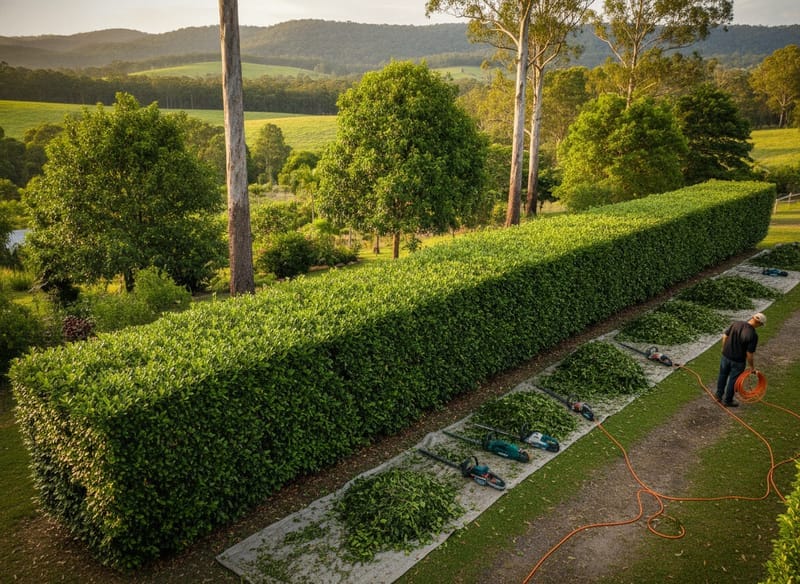
Lifting low branches allows lawn and understory gardens to receive healthy sunlight.
Proper cut placement encourages clean collar callusing and prevents decay.
We evaluate tree architecture, branch union strength, and deadwood volume.
We define pruning objectives according to AS4373 guidelines.
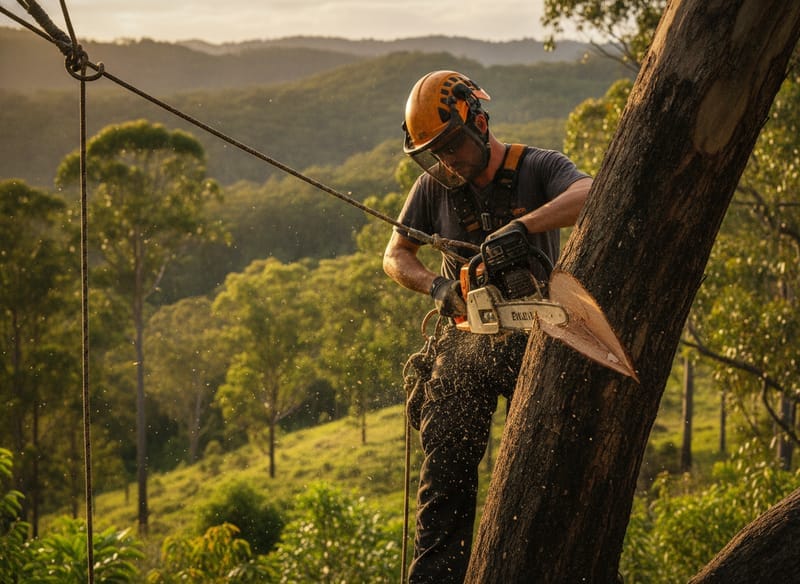
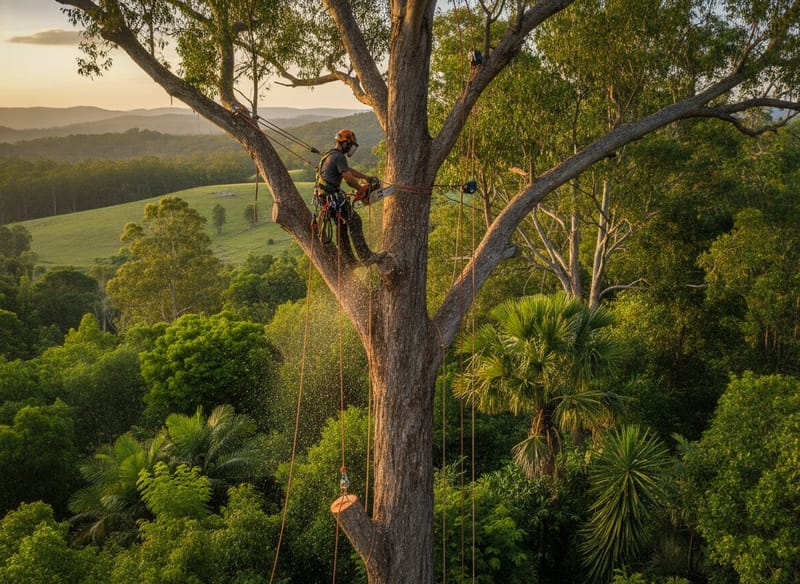
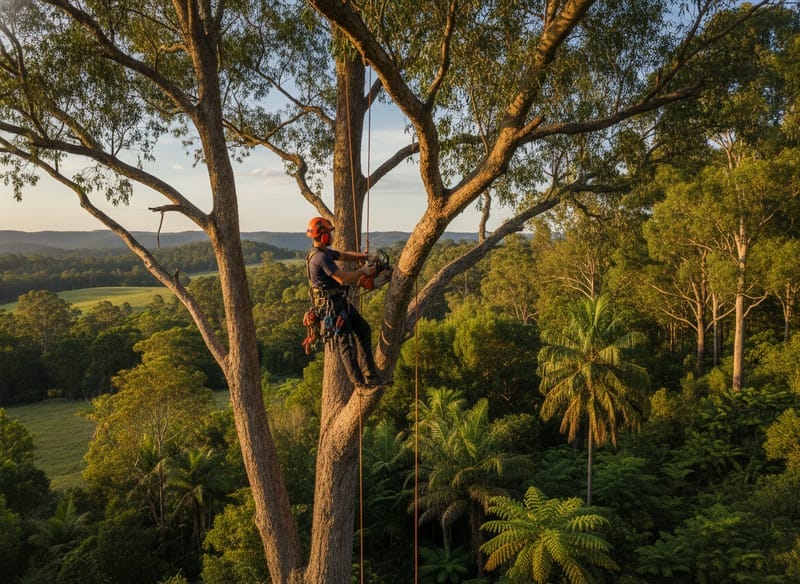
Our arborists climb or use an EWP to make targeted branch cuts.
All pruned material is collected and processed through the woodchipper.
When managing coastal properties along the Mackay coastline, professional Tree Pruning Slade Point services are essential for maintaining canopy health, structural resilience, and clear ocean views. Slade Point properties experience intense coastal winds, salt-laden air, and tropical monsoonal downpours that push trees like mature poincianas, mangoes, and coastal palms to their structural limits.
Our team delivers precision arboricultural pruning tailored to local conditions across Slade Point, from the oceanfront streets near Lamberts Beach to the residential pockets bordering North Mackay and Andergrove. We focus on enhancing branch structure, managing wind resistance, and protecting your home without compromising the long-term vitality of your trees.
In coastal environments like Slade Point, improper cutting techniques such as tree topping or flush-cutting can quickly turn a manageable tree into a serious hazard. When a tree is lopped, it responds by producing rapid, poorly attached epicormic shoots. These weakly anchored limbs grow fast in our warm tropical climate, creating dense outer canopies that act like sails in monsoonal squalls and cyclone-strength gusts, frequently tearing away under wind loading. Our qualified climbers adhere strictly to AS4373 (Pruning of Amenity Trees), executing clean cuts at the branch collar rather than leaving decaying stubs or stripping the interior canopy through destructive lion's-tailing. Correct pruning preserves the natural branch architecture, stimulates compartmentalisation of wounds, and ensures balanced weight distribution. By engaging a professional arborist for tree maintenance, you prevent structural decay, reduce leaf litter across your rooflines, and extend the safe working lifespan of valuable shade trees across your property.
Every cut we make serves a clear biological and structural purpose. We use specialised rigging, top-handle climbing saws, and handsaws to execute clean cuts without damaging retained wood.
Selective removal of small live branches evenly throughout the outer canopy to reduce wind resistance while preserving the tree's natural form. We never exceed 25–30% live crown removal in a single operation, protecting the tree from sunscald and stress.
Removal of lower branches to establish clearance over driveways, footpaths, roofs, and sight lines. Essential in suburban Slade Point streets to allow clear vehicle access and prevent damage from delivery trucks.
Careful shortening of overextended or heavy limbs back to suitable lateral branches that are at least one-third the diameter of the parent stem. This alleviates end-weight stress on vulnerable poincianas and figs without destructive heading cuts.
Targeted removal of dead, dying, diseased, or broken limbs throughout the canopy. We prioritise large deadwood overhanging outdoor entertaining zones, carports, and boundary fences to eliminate impact hazards before storm season.
Structural shaping of young and semi-mature trees to establish a single dominant leader and well-spaced, structurally sound scaffold branches. Prevents co-dominant stems and bark inclusions from forming early in the tree's lifespan.
Precise branch removal to eliminate conflicts with service wires, gutter lines, solar panel arrays, and boundary fences, ensuring compliant clearance distances while respecting natural growth habits.
Our tree pruning process begins with an on-site structural and hazard assessment. We inspect the tree's vitality, branch unions, defect history, and surrounding targets—such as power lines, sheds, and adjacent boundary fences. We confirm site constraints and verify any relevant council overlay requirements before tailoring a precise pruning specification. On the day of work, our climbers establish secure anchor points using rope-access climbing techniques (Single Rope or Doubled Rope Technique), allowing us to access tight backyard canopies where heavy machinery cannot fit. For open front yards, we may deploy insulated Elevating Work Platforms (EWPs). Every cut is executed cleanly at the branch collar using sharp climbing saws to promote natural healing. Ground crew members manage fallen limbs, lowering larger sections with controlled friction-rigging systems to protect your turf, garden beds, and hardscaping. Limbs are fed into our wood chippers to create fresh organic mulch, and we thoroughly rake, blow, and clean the entire site before sign-off.
Our operations strictly align with Australian Standard AS4373-2007 (Pruning of Amenity Trees) and safety guidelines under the Work Health and Safety Act. All aerial pruning is carried out by qualified arborists holding AQF Level 3 climbing tickets, supported on complex assessments by AQF Level 5 consulting arborists.
Our team is fully insured with comprehensive public liability insurance and active WorkCover policies. We operate with certified rigging gear, working at heights accreditation, and strict chainsaw safety protocols, ensuring absolute protection for your property, adjacent assets, and our crews on every project.
Carrying out Tree Pruning Slade Point projects requires an intimate understanding of sandy coastal soils, high wind loads, and rapid tropical growth rates. Dominant local species such as sprawling Poinciana (*Delonix regia*), heavy-bearing Mango (*Mangifera indica*), weeping figs (*Ficus*), and coastal Coconut Palms demand frequent, measured canopy maintenance to stay safe during the wet season. Under the Mackay Region Planning Scheme 2017, private properties may be subject to biodiversity, coastal, or bushfire overlays, while roadside verges and public trees remain strictly protected under Local Law 1 (Administration) 2011. Furthermore, following severe weather events such as ex-Tropical Cyclone Koji, specific disaster recovery clearing exemptions apply across the Mackay region through January 2027 for hazardous vegetation. We verify your property mapping, document tree condition, and ensure all pruning strictly aligns with local planning laws.
Following canopy pruning, monitor the healing process around the branch collars. In Slade Point's warm, humid climate, trees should form smooth wound wood over clean cuts within several growing months. Avoid applying wound paints or sealants, as these trap moisture and encourage fungal decay. We recommend a professional canopy inspection every 12 to 18 months, ideally scheduled prior to the November to April monsoonal storm season. If you observe rapid water shoot proliferation, fungal fruiting bodies, or storm-damaged hanging branches after high winds, contact our arborists promptly for a follow-up assessment.
Pruning costs reflect the time required, equipment needed, and tree accessibility.
We supply clear, fixed written quotes detailing all pruning specifications.
Serving Slade Point and neighboring coastal communities.
Speak with our qualified arborists to schedule a canopy assessment.
Get Your Pruning Quote