Safe, Clear Property
Removing dangerous hanging debris prevents accidents after the storm has passed.
We clear fallen timber, hanging limbs, and storm-shattered canopies following major weather events across Walkerston and the Pioneer Valley.
Providing reliable post-storm cleanup throughout the Pioneer Valley.
Our storm damage tree removal service covers full property cleanups, hazard elimination, and processing of fallen forest materials.
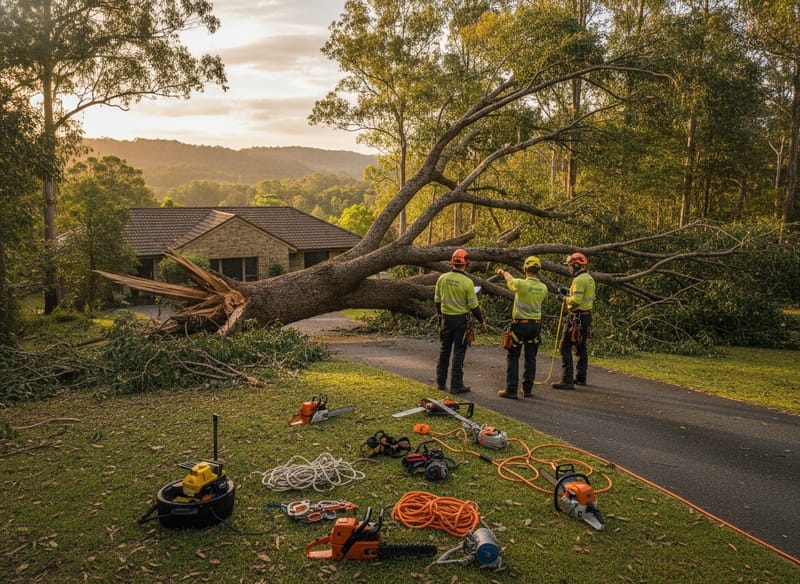
Walkerston felt the full impact of ex-Tropical Cyclone Koji in early 2026. The high rainfall saturated soils, leading to widespread root failure in majestic Raintrees and old Figs. Our team is highly experienced in cleaning up these massive failures.
Removing dangerous hanging debris prevents accidents after the storm has passed.
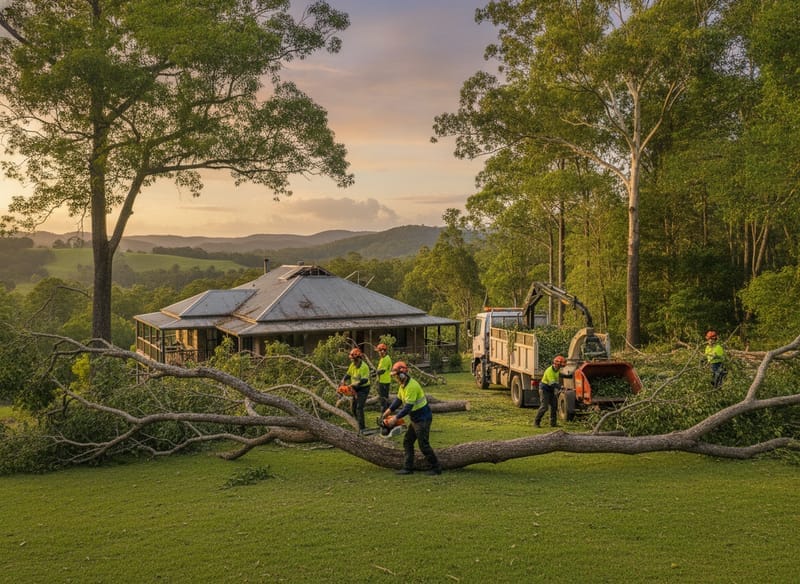
Processing massive piles of foliage and wood chips returns your property to a clean, usable state.
Identifying and pruning structurally weakened trees prevents them from failing during the next storm.
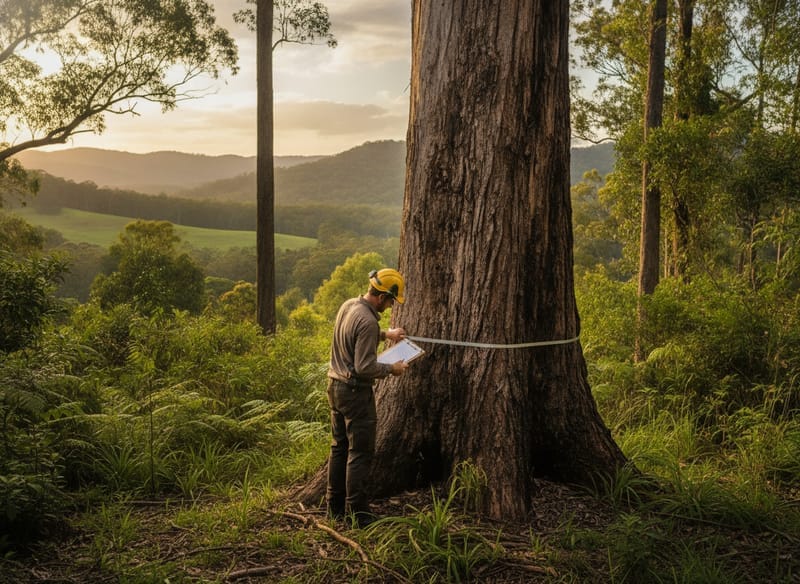
We inspect the storm-damaged trees, identifying hidden hazards like powerlines or split trunks.
We photograph the damage to help verify compliance with disaster exemptions or insurance policies.
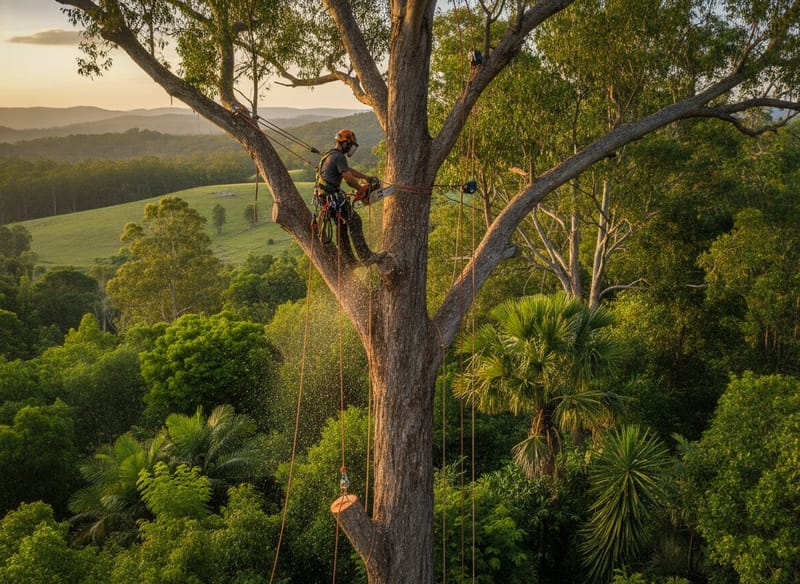
Our climbers and equipment operators dismantle and process the fallen timber safely.
We chip all small material and haul away heavy timber logs, leaving your yard clean.
When severe monsoonal weather strikes the Pioneer Valley, Storm Damage Tree Removal Walkerston becomes an priority for local homeowners, cane farmers, and acreage managers facing compromised timber. Saturated soils combined with cyclonic wind gusts frequently uproot established trees or shear heavy structural limbs over rooftops, driveways, boundary fencing, and agricultural sheds. Our qualified crew responds quickly across Walkerston and neighbouring districts such as Marian, Pleystowe, and Mirani. We deploy heavy-duty equipment, tracked spider lifts, and professional rigging to clear fallen debris safely and secure partially failed trees before they cause secondary structural devastation to your property.
Tackling storm-wrecked trees without professional rigging and arborist training is one of the most hazardous tasks a property owner can undertake. Downed timber frequently holds immense mechanical compression and tension—known in the trade as spring-poles and barber-chair trunks—which can violently snap back during amateur chainsaw cuts. Attempting DIY clearance on unstable root plates or hung-up limbs suspended high in adjacent crowns routinely results in serious injuries and secondary structural impact.
Engaging unqualified contractors who resort to haphazard tree lopping rather than professional arboriculture creates long-term structural instability. Indiscriminate topping stimulates weakly attached epicormic growth that fails under moderate wind loads in the very next storm season. When assessing the need for Storm Damage Tree Removal Walkerston residents can rely on our AS4373-compliant methods.
We approach every storm recovery project under AS4373 (Pruning of Amenity Trees) standards. This ensures salvageable trees receive proper branch collar cuts and target pruning, while irreversibly split or uprooted trees are dismantled safely and methodically to ground level.
Immediate on-site hazard classification and staged sectional dismantling of trees suspended against roofs, sheds, or power drops using rated rigging blocks and friction winches.
Executing precise multi-stage relief cuts on load-bearing trunks and mechanically securing partially uprooted root plates to prevent unpredictable roll or kickback during cutting.
Utilising vehicle-mounted EWPs and mobile cranes for zero-impact dismantling of heavy canopy sections over domestic dwellings and tight-access rural-residential boundaries.
Selective pruning, deadwooding, and weight reduction on storm-stressed lateral limbs to relieve canopy wind resistance while retaining the tree's structural health.
Processing extensive green waste and heavy branches on site using commercial 12-inch chippers, turning storm debris into high-quality organic mulch for soil stabilisation.
Grinding out fractured root balls and storm-torn stumps to depths between 150mm and 300mm below grade, eliminating pest habitats and preparing ground for turf or replanting.
Following severe weather events across the Pioneer Valley, our structured recovery process restores site safety with maximum efficiency: - Step 1: Emergency Site Assessment & Hazard Triage: We walk your property to categorise risks: immediate hazards resting on structures, secondary hanging limbs (widow-makers), structurally compromised standing trees, and ground debris. - Step 2: Insurance Documentation & Transparent Quoting: We photograph structural damage and write detailed line-item quotes formatted directly for submission to your home or rural insurer. - Step 3: Make-Safe Sectional Dismantling: Our AQF Level 3 climbers and EWP operators rig and lower hanging branches and over-structure wood under controlled rope friction. - Step 4: Ground Processing & Felling: Saturated, uprooted, or snapped trunks are safely cut up using commercial Stihl ground saws (MS500i / MS461) with mechanical chocks in place. - Step 5: Chipping, Haulage & Site Cleanup: All brush and debris are fed through our chippers. We rake the yard clean, stack usable firewood if requested, or haul all material away in our tipper trucks.
Our operations comply strictly with AS4373 (Pruning of Amenity Trees) and AS4970 (Protection of Trees on Development Sites). Our climbers hold AQF Level 3 qualifications alongside current units in Chainsaw Operations, Working at Heights (RIIWHS204D), and EWP Operation. We operate with full public liability insurance and comprehensive WorkCover for all personnel. When required by council or insurance assessors, our AQF Level 5 consulting arborist provides certified post-storm tree risk assessments and arboricultural impact reports.
Walkerston sits within the Pioneer Valley's cane belt, where large acreage blocks and older residential streets are shaded by massive Poinciana (*Delonix regia*), heavy backyard Mangoes (*Mangifera indica*), Raintrees (*Samanea saman*), and native Forest Red Gums (*Eucalyptus tereticornis*). The region experiences monsoonal wet season conditions from November to April, where intense rainfall supersaturates alluvial soils right as cyclonic wind bursts hit. This combination frequently causes whole-tree root plate failures rather than isolated branch snapping. Under the Mackay Region Planning Scheme 2017, vegetation clearance is governed by biodiversity overlays. However, following declared weather disasters such as ex-Tropical Cyclone Koji, state disaster clearing exemptions allow landholders to clear storm-damaged trees that present an immediate hazard to life, property, or essential infrastructure without standard application delays. We document and photograph every tree hazard before work begins to guarantee total council compliance.
Trees that survive severe storms often carry hidden stress fractures, torn internal roots, and unbalanced crowns. We recommend monitoring surviving trees closely over the subsequent six to twelve months for telltale signs of failure, including soil cracking on the tension side of the trunk, sudden fungal fruiting at the base, or canopy dieback.
Book a preventative inspection with our arborists before the next storm season begins. Carrying out weight-reduction pruning and removing deadwood every two to three years substantially reduces wind sail and prevents catastrophic failures during future severe weather events.
Storm damage cleanup is quoted based on the size of the trees and the specific equipment required.
We provide detailed, upfront pricing to help you understand costs, particularly when working with insurers.
We provide storm damage cleanup services throughout Walkerston, the Pioneer Valley, and surrounding Mackay suburbs.
Safely clean up your Pioneer Valley property after severe storms. Talk to our local crew.
Book a Free Quote